DNA-encoded library screening
A library of 343 million synthesised, DNA-encoded compounds screened against a target in a single affinity selection — chemical space that plate-based screening could not sample in years.
Chemtelliq screens a DNA-encoded library of 343 million synthesised compounds, identifies the genuine hits with its own AI models, and optimises them through structure-based design and bench validation.
One discovery engine feeding two development modalities.
A library of 343 million synthesised, DNA-encoded compounds screened against a target in a single affinity selection — chemical space that plate-based screening could not sample in years.
Targeting peptides joined to a payload through a tuned linker, so the drug concentrates where it is needed and the therapeutic window widens.
PROTAC and degrader chemistry that recruits the cell’s own ubiquitin–proteasome machinery to remove a disease-driving protein rather than merely block it — reaching targets with no druggable active site.
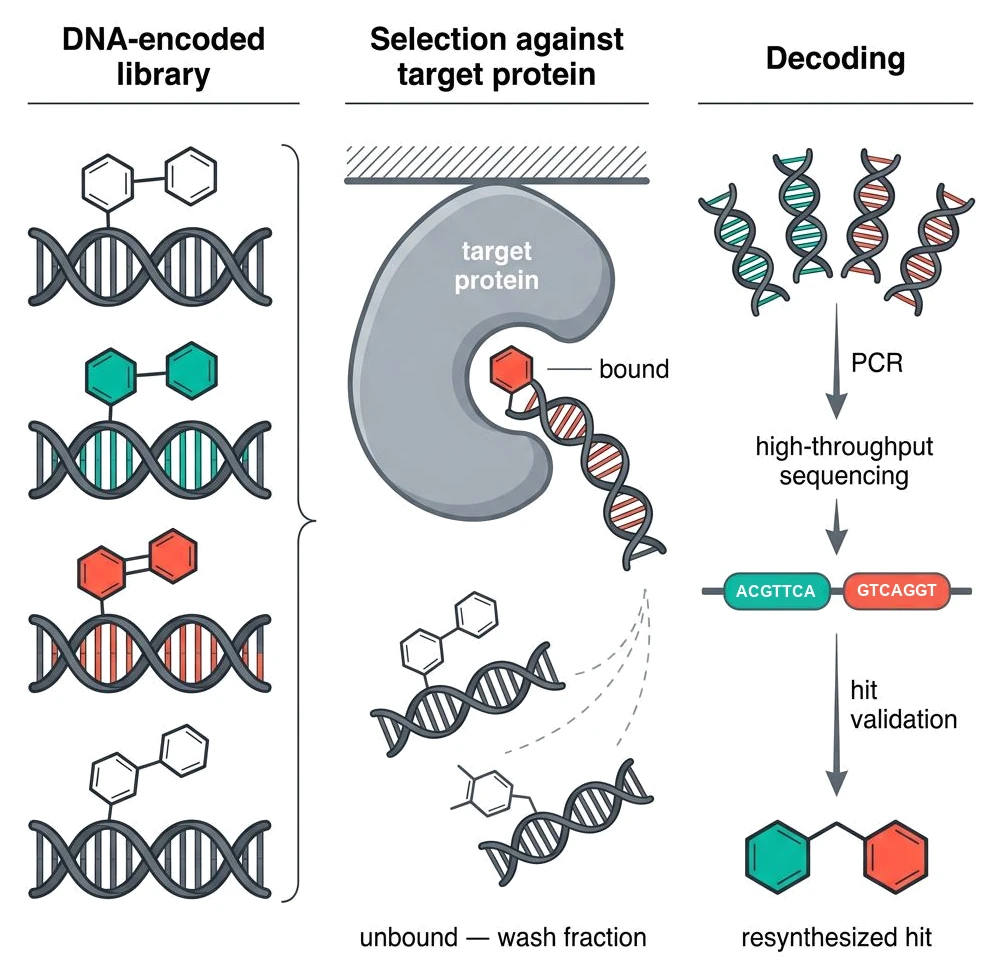
Every compound carries a DNA barcode recording how it was made. That lets 343 million of them meet a target in a single tube: what binds is kept, what does not is washed away, and sequencing reads back the answer.
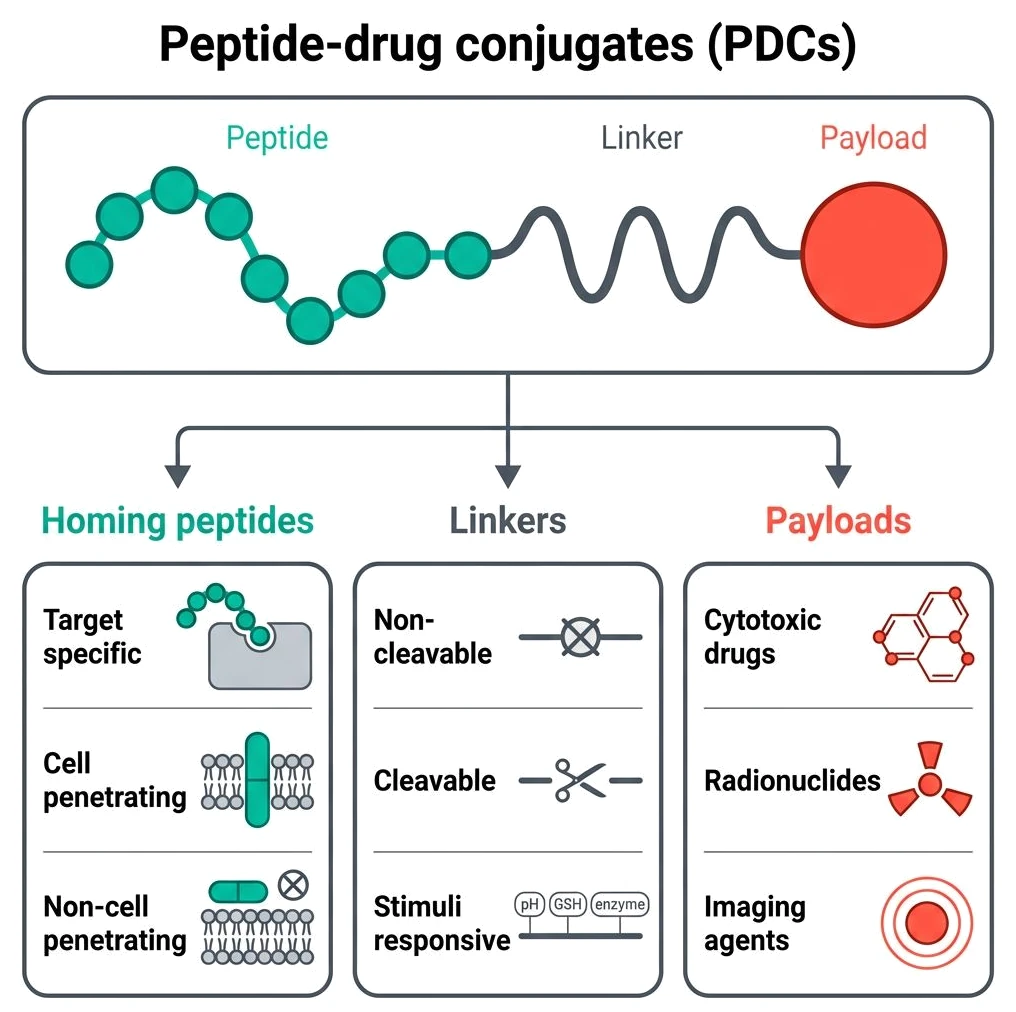
The peptide finds the receptor, the linker holds the payload until it should not, and the payload does the work. Each of the three is a design choice in its own right — how the peptide enters the cell, whether the linker releases on pH, glutathione or an enzyme, and whether the payload kills, irradiates or images.
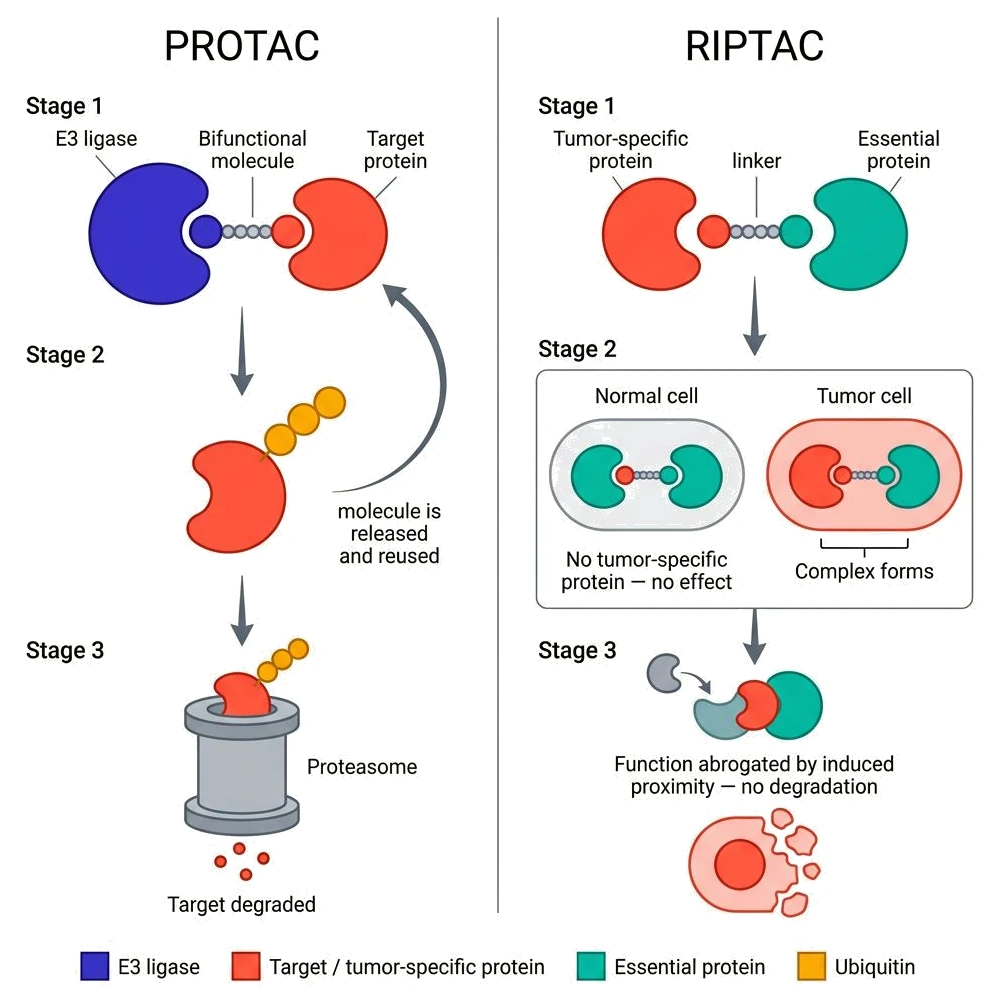
A degrader recruits the cell’s own disposal machinery to remove a protein rather than block it — and is released to do it again. Induced proximity can also disable a protein outright, acting only where the tumour-specific partner exists.
Physical chemistry, machine learning and bench work sit on the same clock. That loop is the platform.
Our physical chemists model protein structures and predict molecular docking to explain how a hit binds — then modify it, round by round, through lead optimisation.
Machine learning and deep learning models read the selection data from a 343-million-compound library and separate genuine binders from artefacts — the step that decides what is worth making.
Protein production, binding characterisation and cell-based validation are run by our own team. Results come back in days, and every result — including the negatives — retrains the model.
We collaborate with pharmaceutical companies, academic groups and investors on targets that conventional screening has struggled with.